
- Our Specialties
- Elbow, Hand & Wrist
- Foot & Ankle
- Hip & Knee
- Neck & Back
- Neurological
- Shoulder
- Sports Medicine
- Gymnastics & Dance Medicine
- - Ankle Impingement
- - Back Pain
- - Chronic Ankle Instability (CAI)
- - Hip Impingement and Labral injury
- - Snapping Hip
- - Sprains & Strains
- - Tendonitis
- - Upper Body Injury
- Work Injuries
- Treatments
- Women's Health
- Fall Prevention
Built for the way you move.
South Carolina's dance medicine team for dancers, gymnasts, and cheer athletes. Our Doctors of Physical Therapy understand pointe shoes, back handsprings, and eight-show weekends, and several of us have lived them.
Book an Injury Evaluation Schedule a Pre-Pointe Screening Call (803) 233-1366
- Pre-pointe screening
- Injury rehab
- Studio and backstage care
- Strength and conditioning
- 5 clinics across South Carolina
What Is Dance Medicine?
Dance medicine is a specialty within sports and performing arts medicine that focuses on the health, injuries, and training of dancers and other artistic athletes. Dance asks the body for extreme range, turnout, repeated jumps and landings, and long hours of practice, often starting at a young age. A dance medicine physical therapist knows those demands and builds care around them, from your first evaluation to the last rehearsal before you return to the stage.
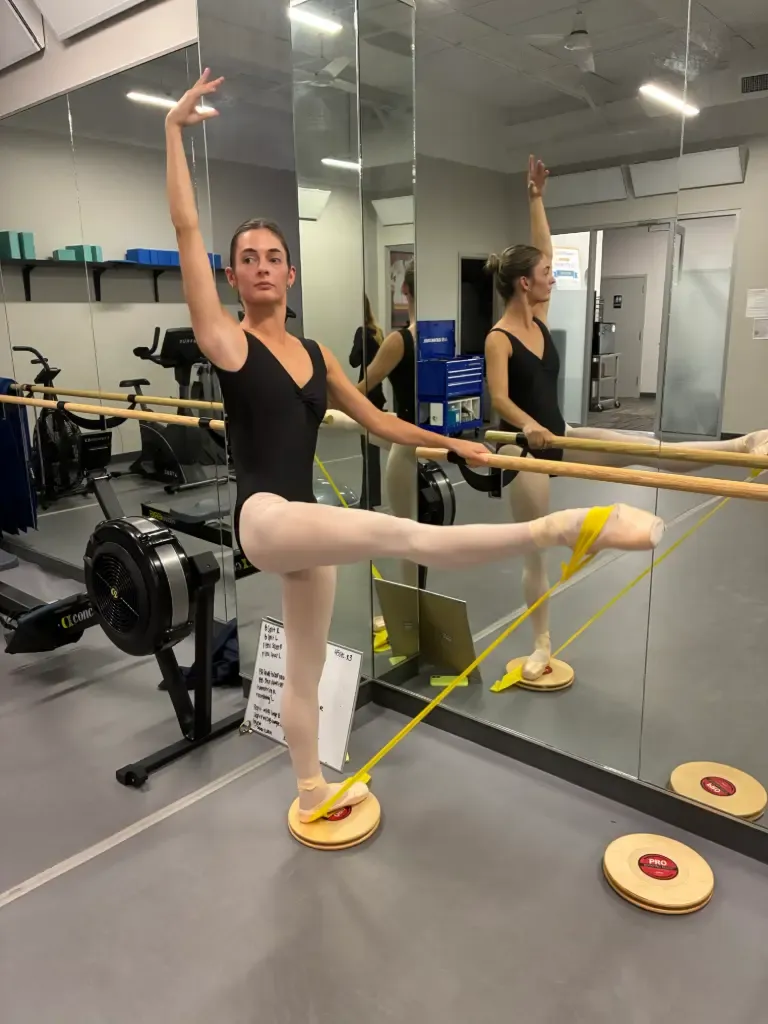
At ProMotion, our dance and performing arts medicine program is led by Dr. Nancy K. Imbeau, PT, DPT, OCS, MTC, a board-certified orthopedic clinical specialist and a member of the International Association for Dance Medicine & Science (IADMS), and Dr. Riley Nowling, PT, DPT, who has a background in ballet. Our Columbia clinic has a full dance studio on site, with a sprung floor, ballet barre, and mirrors, so we can see you move the way you move in class.
Physical Therapy for Dancers, Gymnasts, and Cheer Athletes
Care for the artistic athlete. Dancers, gymnasts, and cheerleaders share something most sports don't. They need extreme flexibility and the strength to control it. Many are naturally hypermobile. That range is a gift on stage, but it can lead to overuse injuries when strength, balance, and control don't keep up.
We treat athletes of every age and level:
- Dancers: ballet, pointe, contemporary, jazz, tap, hip-hop, competition, and pre-professional
- Gymnasts: artistic, rhythmic, and tumbling
- Cheer athletes: all-star, school, and collegiate, including bases, flyers, and tumblers
- Figure skaters: jumps, spins, and landing mechanics
We also work with parents, teachers, coaches, and studio directors who want to keep their athletes healthy all season. Gymnasts in the Pee Dee can see Dr. Mason Chase, a former gymnast, at our Florence clinic.
Flexible isn't the same as strong.
Hypermobile athletes often move easily into end range but lack the muscle control to protect their joints there. Our physical therapists build stability through your full range, so you can use all of it safely.
South Carolina's Dance Medicine Team
We speak your language. Our team is led by Doctors of Physical Therapy who specialize in dance medicine and who come from the studio themselves. When you say your relevé feels unstable or your hip snaps during développés, we know exactly what you mean.
- Dancers treating dancers. Several of our team members were dancers, gymnasts, or performers themselves. We know the technique, the terminology, and the pressure of performance season.
- A real dance studio inside our clinic. We evaluate you in the kind of space you dance in, and in your final phase of rehab we use our Columbia studio to practice the combinations that used to hurt.
- Rehab that ends on stage, not on the table. Your plan progresses to dance-specific movement, in parallel and turned out, with a focus on strength, alignment, control, and how you load your body. The goal is a pain-free return to class, rehearsal, and performance.
- We listen first. Your plan is built around what matters most to you, whether that's an audition, a competition weekend, or getting through Nutcracker season.
- We plan around your full schedule. Studio classes, school dance team, competitions, and summer intensives all count toward your training load, so we account for all of them.
- Evidence-based care. We follow current research and guidance from IADMS, the Performing Arts Medicine Association (PAMA), peer-reviewed dance medicine journals, and orthopedic care organizations.
- Care at all five clinics. Physical therapists at every ProMotion clinic treat dancers, gymnasts, and cheer athletes.
- We come to your studio. Pre-season screens, in-season care, and backstage coverage can come to you.
Meet Our Dance Medicine Team
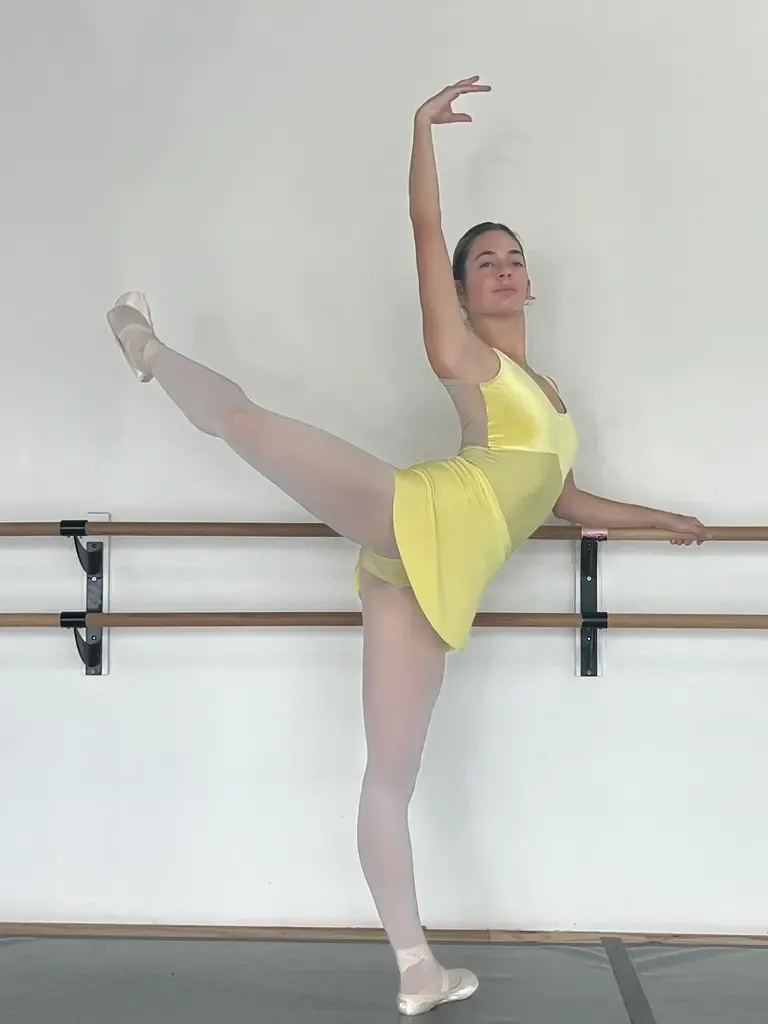
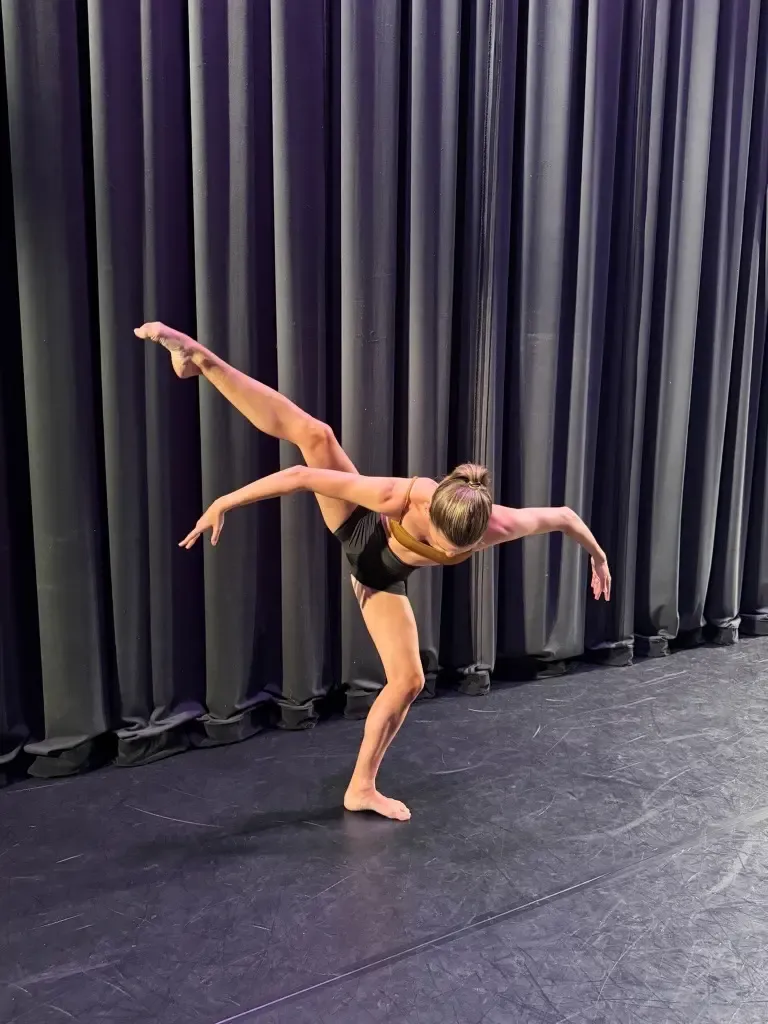
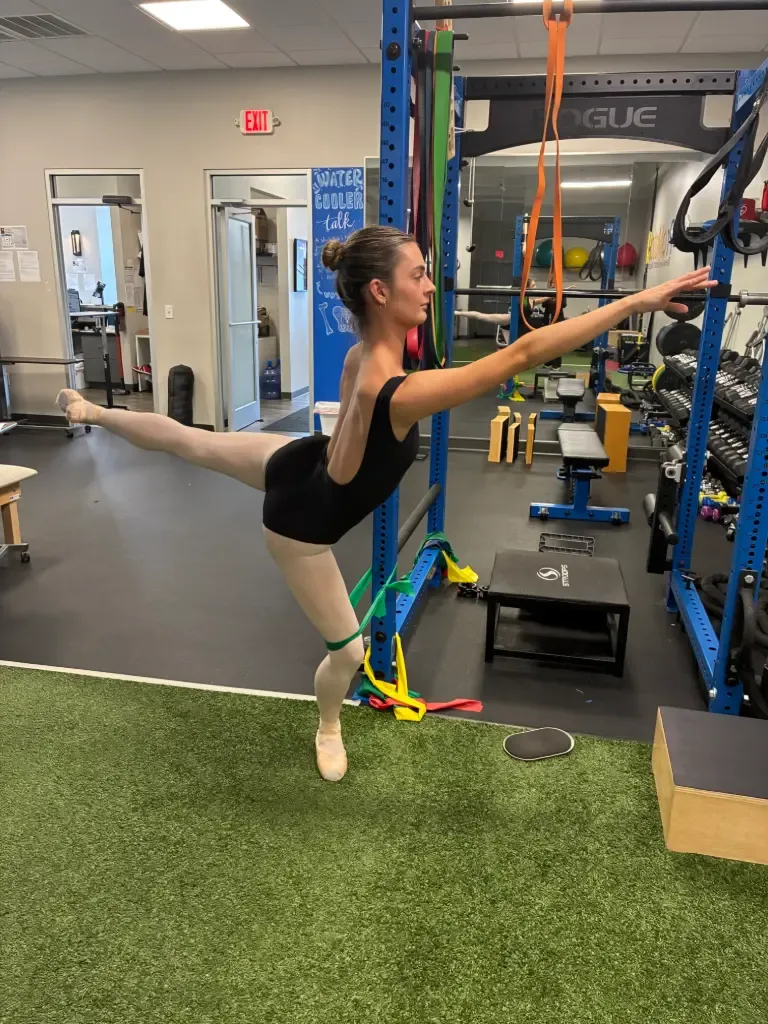
Dr. Imbeau and Dr. Nowling lead our dance medicine program in Columbia. Physical therapists at all five ProMotion clinics treat dancers, gymnasts, and cheer athletes, and Dr. Mason Chase works with gymnasts at our Florence clinic.

Dr. Nancy K. Imbeau, PT, DPT, OCS, MTC
Co-Founder, Physical Therapist · Columbia
Nancy is a board-certified orthopedic clinical specialist with a post-graduate manual therapy certification. She earned her Doctor of Physical Therapy from the University of Pittsburgh and co-founded ProMotion in 2015. She is a member of IADMS and serves on the Board of Directors for the University of South Carolina's Betsy Blackmon Dance Program. She treats dancers, gymnasts, and active adults, with a focus on hip, knee, ankle, and foot injuries. View Nancy's profile

Dr. Riley Nowling, PT, DPT
Physical Therapist · Columbia
Riley has a background in ballet and competitive swimming. She earned her Doctor of Physical Therapy from the University of South Carolina and treats dancers, gymnasts, and performing artists, with a focus on injury rehab, strength, flexibility, and movement quality. Outside the clinic, she still enjoys ballet. View Riley's profile
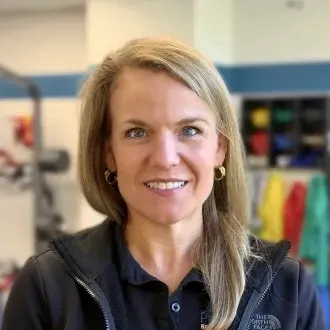
Dr. Elizabeth "Mason" Chase, PT, DPT
Physical Therapist · Florence
Mason is a former gymnast and an avid runner with 16 years of clinical experience. She earned her Doctor of Physical Therapy from the University of North Carolina at Chapel Hill and works with gymnasts, runners, and athletes at our Florence clinic. She is certified in dry needling, Graston Technique, and blood flow restriction therapy. View Mason's profile
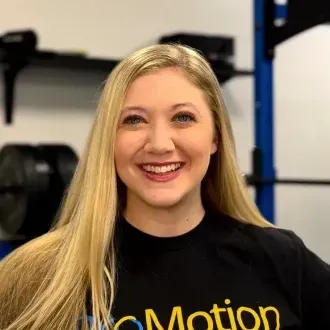
Heather Kopacz
Personal Trainer · Columbia
Heather is an NASM-certified personal trainer and a former professional dancer and choreographer who trained at the American Musical and Dramatic Academy. She became a certified group fitness instructor in 2014, and she builds strength and conditioning programs for dancers at our Columbia clinic. View Heather's profile
Common Dance and Gymnastics Injuries We Treat
The foot and ankle are among the most commonly injured areas in dancers. Hips, knees, backs, and shoulders take a beating too, especially in athletes who tumble, lift, fly, or land big jumps.
| Area | Common conditions | How physical therapy helps |
|---|---|---|
| Foot and ankle | Ankle sprains, chronic ankle instability, Achilles and FHL tendinopathy ("dancer's tendinitis"), posterior ankle impingement and os trigonum, sesamoid pain, stress fractures | Restore range and balance, progressive calf and foot strengthening, and a safe return to relevé, pointe, and jumps |
| Hip | Snapping hip, hip flexor strain, labral tears and hip impingement | Build deep hip and core control, protect end range, and correct forced turnout |
| Knee | Patellofemoral (front-of-knee) pain, patellar tendinopathy ("jumper's knee") | Hip and quad strengthening, landing mechanics, and plié alignment |
| Low back and pelvis | Extension-related back pain common in back walkovers, layouts, and arabesque | Core and hip stability, load management, and a safe return to backbends |
| Shoulder, elbow, and wrist | Instability in hypermobile athletes, wrist pain from weight-bearing skills, and overuse from lifts, stunts, and handstands | Rotator cuff and shoulder blade strength, and weight-bearing tolerance |
| Whole body | Hypermobility, fatigue-related injury, sprains and strains, low energy availability and bone stress | Strength through full range, training-load guidance, and referral to nutrition and medical partners when needed |
Don't wait it out.
A previous injury is one of the strongest predictors of the next one. In a study of 77 university dance majors, about 3 in 4 of those who had sprained an ankle had chronic ankle instability. The right rehab now can help reduce the risk of the next injury.
Simon, Hall, and Docherty, Journal of Dance Medicine & Science, 2014
Did you know?
In a survey of 87 elite ballet dancers, 91% reported hip snapping or clicking, and 58% said the snapping was painful. Common doesn't mean it should hurt. Painful snapping often responds well to physical therapy.
Winston and colleagues, American Journal of Sports Medicine, 2007
Hurting now?
You can often start physical therapy without a doctor's referral, and evaluations are available at all five ProMotion clinics. We'll verify your benefits before your first visit.
Dance Medicine Services
From pre-pointe screens to backstage care, here's how our dance medicine team can help.
Pre-Pointe Screening
Going up on pointe is a milestone, and readiness is about more than age or years of training. Our pre-pointe screen uses research-based tests of:
- Ankle and foot range of motion
- Calf strength and endurance
- Balance
- Alignment, including hip and knee control over the foot
- Jump control and landing
You'll leave with clear results, a corrective exercise plan for any areas to build, and a recommended re-screen date, typically 6 to 8 weeks out. With a parent or guardian's permission, results are easy to share with your dancer's teacher so you can make the pointe decision together. We also use this screen to clear dancers returning to pointe after an injury.
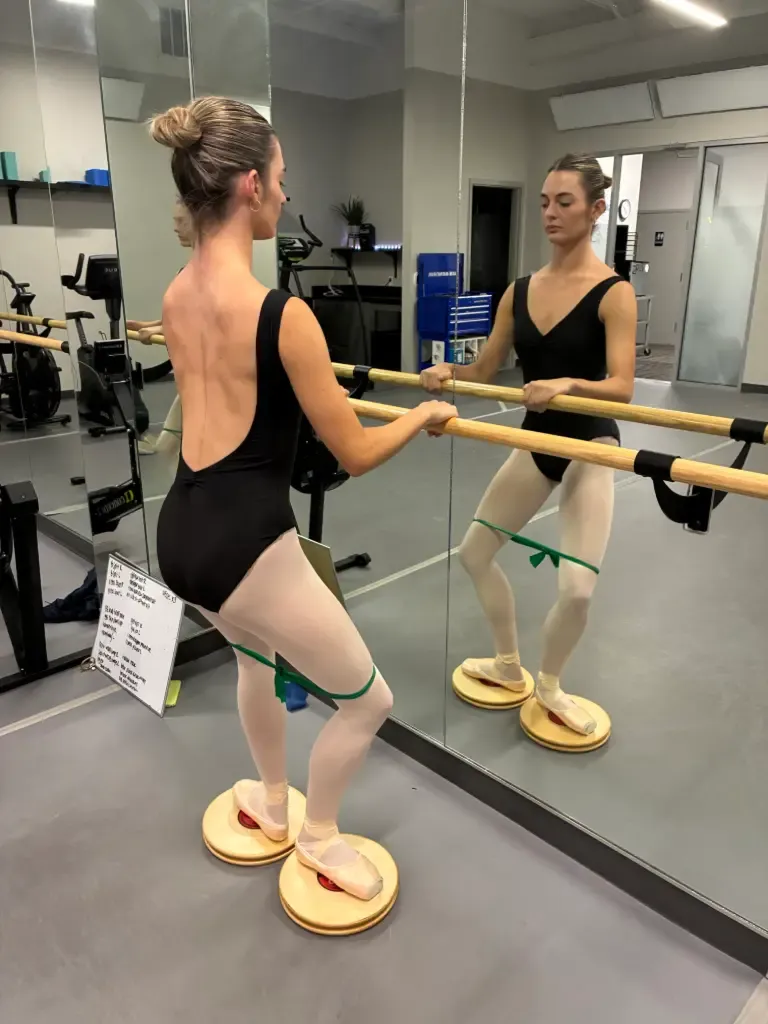
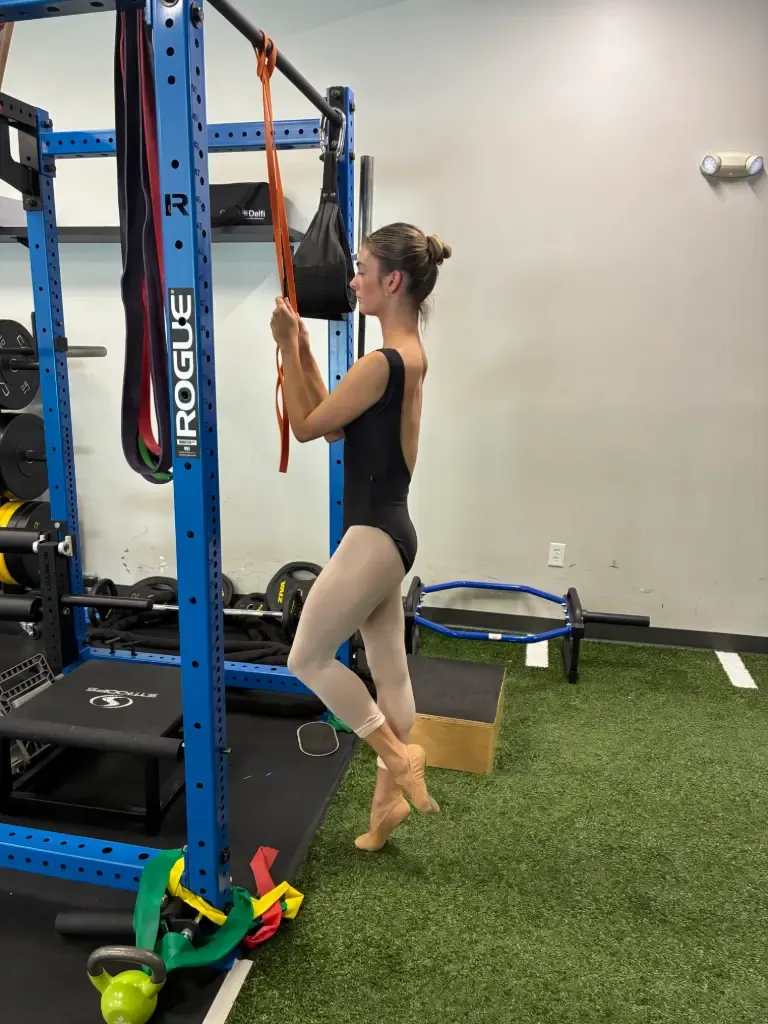
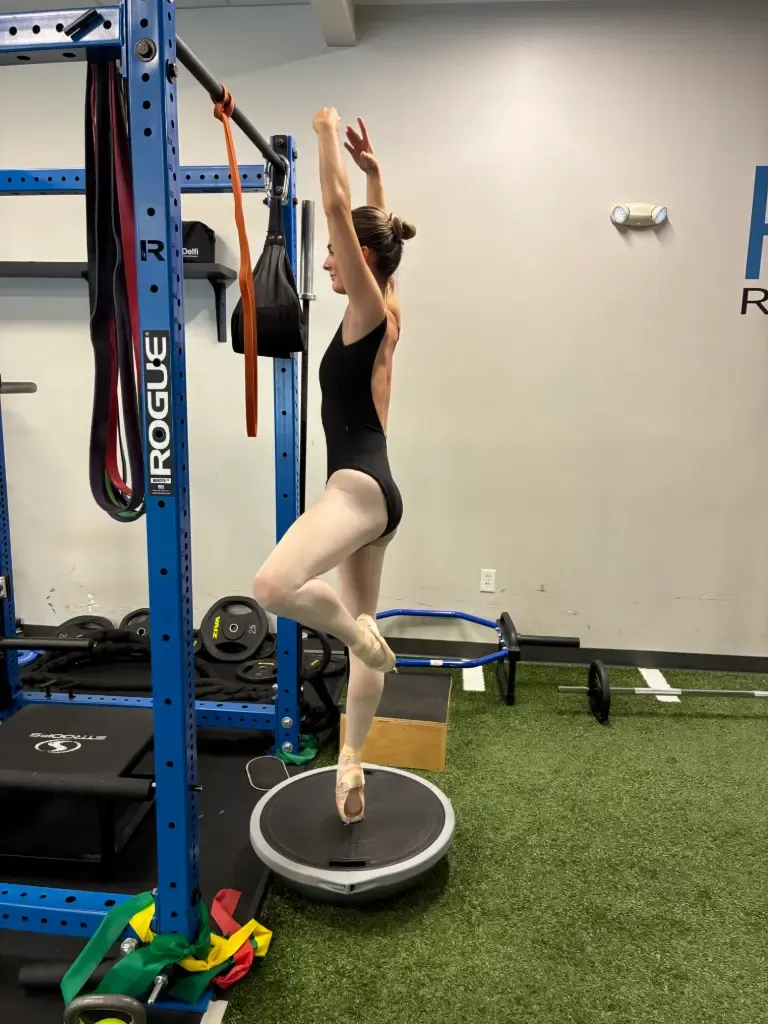
Dance Injury Evaluation and Rehabilitation
Work one-on-one with a Doctor of Physical Therapy who listens to what matters most to you. We treat the injury, find the cause, whether that's technique, strength, training load, or footwear, and progress you back to class, competition, and performance. In Columbia, your final phase of rehab can happen in our studio, where we practice the choreography that used to hurt before you go back to class.
On-Site and Backstage Care for Studios, Schools, and Teams
We come to your studio, gym, school, or theater:
- Pre-season injury screens and mid- or post-season re-checks, with take-home exercise programs
- Guided pre-performance dynamic warm-ups for the full cast or team
- Backstage triage during performances: injury assessment, dry needling, taping, and pre- and post-show care
- Educational workshops for dancers, parents, teachers, and coaches on injury risk, performance, and wellness
Studio owners and coaches: ask us about on-site screening and performance-season coverage.
Strength and Conditioning for Dancers
Train with our personal trainer, Heather Kopacz, at our Columbia clinic. Heather is a former professional dancer, and she builds programs around your art form: strength, power, endurance, and control work that supports your technique. Because she works alongside our physical therapists, your training can pick up where your rehab leaves off.
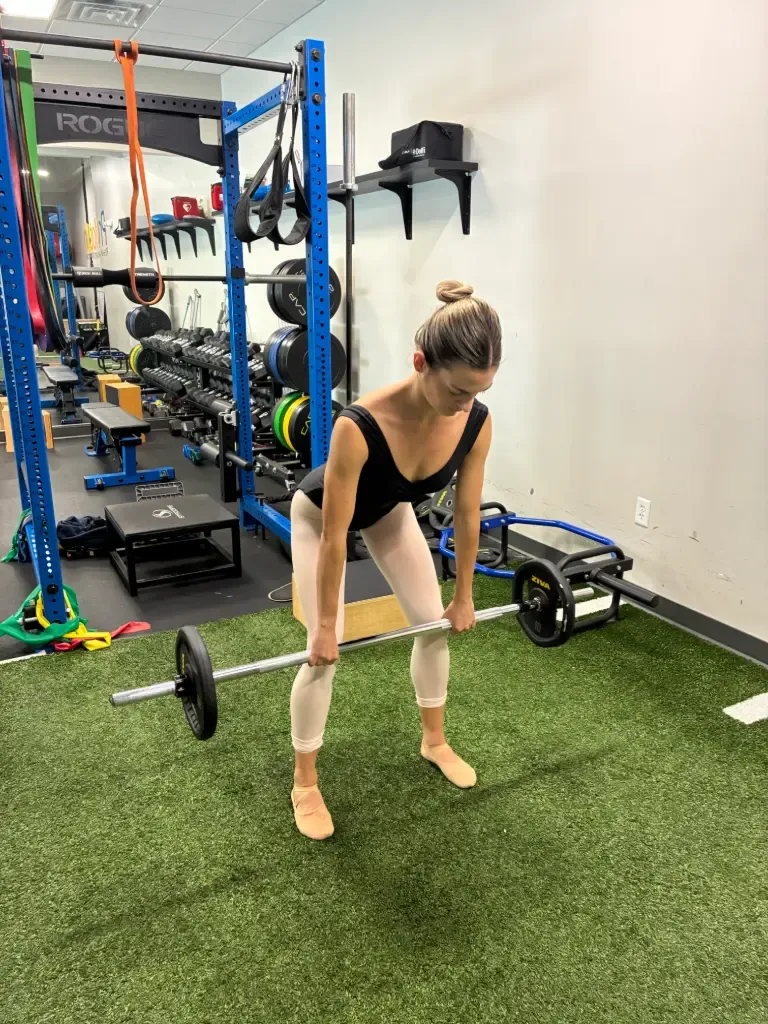
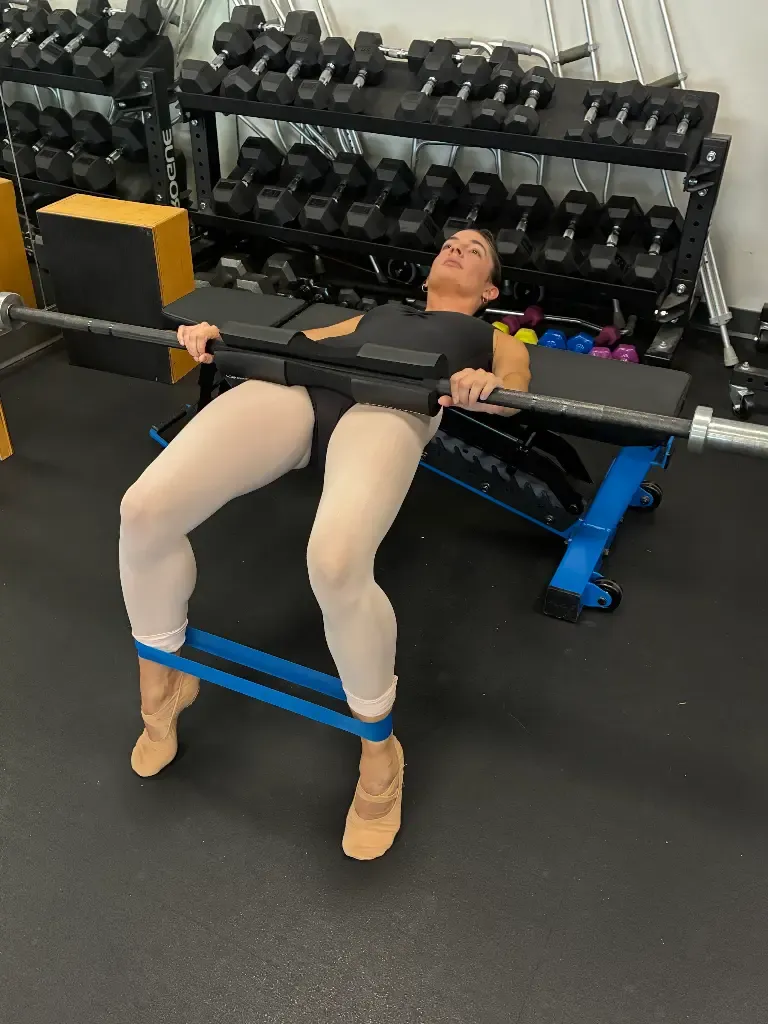
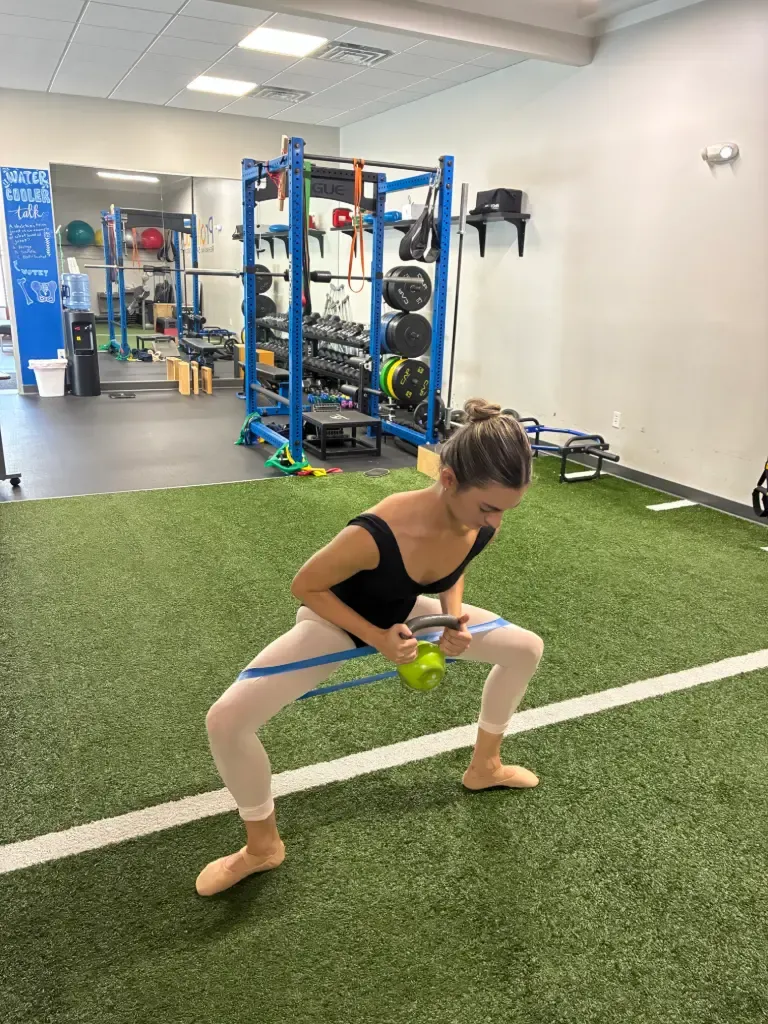
Strength Training for Dancers: Why Class Alone Isn't Enough
Research shows dance class by itself does not build the fitness that performance demands. Strength and conditioning fills that gap.
- Lower injury risk. Cross-training for aerobic fitness and core strength is linked to lower injury risk and less fatigue.
- Better performance. Fitter dancers can focus on artistry instead of just getting through the choreography.
- Confidence in lifts, stunts, and inversions. Handstands, walkovers, partnering, and cheer stunts all need upper body strength as well as flexibility.
- Support for hypermobile joints. Strength gives joints the dynamic support that ligaments can't.
- Smarter load management. Sudden spikes in rehearsal hours before shows or after breaks raise injury risk. Planned, progressive training helps the body keep up.
"Increased fitness during training can allow room for greater focus on artistry and reduced injury risk."
Claire Farmer and James Brouner, "Preparing dancers for upper body demands in ballet and contemporary dance"
The IADMS Bulletin for Dancers & Teachers, Volume 10, Issue 1, 2026
How to Ease Back Into a Full Dance Schedule
September and October are some of the highest-injury months of the dance year. The cause is usually how fast dancers return to full hours. The same idea applies after winter break or any long stretch away from the studio.
Here's a sample ramp-up for a dancer working toward about 25 hours a week:
| Week | Dance hours | What to add |
|---|---|---|
| 1 | About 50% (12 to 13 hours) | No jumps. Foundational pointe work only. |
| 2 | About 60% (15 hours) | Two-footed jumps |
| 3 | About 70% (17 to 18 hours) | Small single-leg jumps |
| 4 | About 80% (20 hours) | Big traveling jumps |
| 5 | Full schedule | Full training load, with a plan for known spikes like new choreography or show weeks |
Pair it with 2 to 4 strength sessions a week. Every dancer is different, so treat this as a starting template and adjust it to the dancer. Read Dr. Imbeau's full article on the seasonal ramp-up.
When Should a Dancer See a Physical Therapist?
Don't wait for an injury to make you miss class. Get checked if you notice:
- Soreness that lasts more than 24 to 48 hours
- Pain at the same point in class every time, especially with swelling
- Pain that changes how you dance, jump, or land
- Technique that falls apart when you're tired
- A dancer who seems "off," hesitant, or less coordinated than usual
Teachers and parents are often the first to notice these signs. If something seems off, an evaluation will tell you whether it needs treatment or just a smarter training plan.
What to Expect at Your First Visit
- Connect. Book online or call (803) 233-1366. Often you don't need a doctor's referral, and we verify your benefits before your first visit.
- Evaluate. Your first visit typically takes about 1 hour and 15 minutes. We listen to your goals and what hurts, then assess how you move, in our Columbia dance studio when it helps.
- Plan. You'll leave with a clear explanation of what's driving the problem and a plan tied to your goals, whether that's a competition date, an audition, or your next show.
- Progress. Hands-on care and dance-specific exercise, progressed week by week.
- Prove. Before you return to full class, we practice real combinations with you, so you and your teacher can feel confident about the next step.
What to bring: clothes you can move in, your dance shoes (including pointe shoes if you wear them), your insurance card, your completed patient forms, and any imaging or reports. Please arrive 15 minutes early.
Where We Treat Dancers in South Carolina
Physical therapists at all five ProMotion clinics treat dancers, gymnasts, and cheer athletes. Our dance studio and dance medicine specialists are at our Columbia clinic.
Columbia: home of our dance studio. Dr. Imbeau, Dr. Nowling, and Heather Kopacz work here, alongside our on-site dance studio. We serve dancers from Columbia, Forest Acres, Cayce, West Columbia, and across the Midlands.
ProMotion Rehab and Sports Medicine, Columbia · 4420 Rosewood Drive, Columbia, SC 29209 · (803) 233-1366 · Monday to Thursday 8 am to 6 pm, Friday 8 am to 12 pm · Visit the Columbia clinic page
Florence. Dr. Mason Chase, a former gymnast, treats gymnasts and athletes here.
ProMotion Rehab and Sports Medicine, Florence · 610 W. Palmetto Street, Florence, SC 29501 · (843) 407-0377 · Monday to Thursday 8 am to 6 pm, Friday 8 am to 12 pm · Visit the Florence clinic page
Camden. Dance medicine care is available here.
ProMotion Rehab and Sports Medicine, Camden · 301 E Dekalb St #B, Camden, SC 29020 · (803) 432-2432 · Monday to Thursday 8 am to 6 pm, Friday 8 am to 12 pm · Visit the Camden clinic page
Lake City. Dance medicine care is available here.
ProMotion Rehab and Sports Medicine, Lake City · 148 Sauls St, Suite B, Lake City, SC 29560 · (843) 374-0185 · Monday to Thursday 8 am to 6 pm, Friday 8 am to 12 pm · Visit the Lake City clinic page
Spartanburg. Dance medicine care is available here.
ProMotion Rehab and Sports Medicine, Spartanburg · 958 East Main Street, Suite B, Spartanburg, SC 29302 · (864) 278-0431 · Monday to Thursday 8 am to 6 pm, Friday 8 am to 12 pm · Visit the Spartanburg clinic page
At your studio. Our team can come to your studio, gym, school, or theater for screenings, warm-ups, and performance-season care.
Dance Medicine FAQs
Do I need a doctor's referral to see a dance physical therapist?
Often, no. South Carolina allows you to see a physical therapist directly in many cases, and direct access is available for most insurance plans. Some plans still require a referral, so the ProMotion Team verifies your benefits before your first visit. Learn more on our Insurance and Prices page.
When is my dancer ready for pointe?
Age and years of training are only part of the picture. Readiness depends on ankle and foot range of motion, calf strength, balance, and control. A pre-pointe screen gives you and your dancer's teacher objective answers, plus a plan for anything that still needs work.
What age do dancers usually start pointe?
Guidelines from the International Association for Dance Medicine & Science (IADMS) recommend waiting until at least age 12, and starting in the fourth year of ballet training for dancers who take class at least twice a week. Age is only the starting line, though. Ankle and foot range of motion, strength, alignment, and control decide whether a dancer is ready, which is why we screen for them.
My child is very flexible. Is that a problem?
Not by itself. Flexibility becomes a problem when it isn't matched by strength and control. We test for hypermobility and build stability through the full range.
Will I have to stop dancing while I recover?
Rarely completely. For most injuries, complete rest isn't recommended. We modify your training so you can stay active while you heal.
Should I ice a new injury?
Short-term ice can help with pain, but research no longer supports heavy icing. We'll teach you a simple, dancer-friendly plan for the first few days after an injury.
Do you treat gymnasts, cheerleaders, and figure skaters?
Yes. They share many of the same demands as dancers, including extreme range, hard landings, and the need for control, and they benefit from the same expertise.
Can you come to our studio, gym, or school?
Yes. We offer pre-season screens, in-season re-checks, guided warm-ups, backstage care during performances, and workshops for dancers, parents, teachers, and coaches. Call (803) 233-1366 to plan a visit.
How long should a dancer take to get back to a full schedule after a break?
About 4 to 5 weeks for most dancers, starting at roughly half of full hours in the first week. Dancers returning from an injury or a long break may need longer.
Does insurance cover dance physical therapy?
Injury evaluations and treatment are billed to insurance the same way as any other physical therapy visit. We take most major plans and verify your benefits before your first visit. Screenings, like a pre-pointe screen, are often self-pay because they look at risk rather than an existing injury. We'll tell you what applies before you're seen.
How long is the first appointment?
Typically about 1 hour and 15 minutes. That covers a full evaluation, a conversation about your goals, and starting treatment the same day.
Where do you treat dancers in South Carolina?
Physical therapists at all five ProMotion clinics, in Camden, Columbia, Florence, Lake City, and Spartanburg, treat dancers, gymnasts, and cheer athletes. Our dance studio and dance medicine specialists are at our Columbia clinic on Rosewood Drive, and our team can come to your studio for screenings and performance-season care.
Ready for Your Best Season Yet?
Whether you're preparing for pointe, recovering from an injury, or getting ready for competition, our dance medicine team is here to help you move with strength and confidence.
Book an Injury Evaluation Schedule a Pre-Pointe Screening Call (803) 233-1366
Keep Reading
- From Rehearsal to the Stage: Why Dancers Need a Gradual Return to a Full Schedule Each Season
- Injury Prevention and Movement Screening
Research Behind This Page
- Simon J, Hall E, Docherty C. Prevalence of chronic ankle instability and associated symptoms in university dance majors: an exploratory study. Journal of Dance Medicine & Science, 2014, 18(4), 178-184.
- Winston P, Awan R, Cassidy JD, Bleakney RK. Clinical examination and ultrasound of self-reported snapping hip syndrome in elite ballet dancers. American Journal of Sports Medicine, 2007, 35(1), 118-126.
- Richardson M, Liederbach M, Sandow E. Functional criteria for assessing pointe-readiness. Journal of Dance Medicine & Science, 2010, 14(3), 82-88.
- Weiss DS, Rist RA, Grossman G. Guidelines for initiating pointe training. International Association for Dance Medicine & Science resource paper.
- Farmer C, Brouner J. Preparing dancers for upper body demands in ballet and contemporary dance. The IADMS Bulletin for Dancers & Teachers, 2026, 10(1).
- Fuller M. When do injuries occur across dance training and career development? The IADMS Bulletin for Dancers & Teachers, 2026, 10(1).
- Russell JA. Preventing dance injuries: current perspectives. Open Access Journal of Sports Medicine, 2013, 4, 199-210.
- Weber AE, Bedi A, Tibor LM, Zaltz I, Larson CM. The hyperflexible hip: managing hip pain in the dancer and gymnast. Sports Health, 2015, 7(4), 346-358.